Melatonin for Sleeping: Why it’s Not Working & How to Fix It

Jump to
Having trouble falling or staying asleep? You’ve probably turned to melatonin for sleeping at some point, hoping it would finally do the trick. A lot of people try it, don’t feel any different, and chalk it up as another gimmick that doesn’t actually work.
Melatonin can work—really well—but only if you’re using the right form, dose, and routine to support it.
It’s one of the most commonly used sleep supplements for a reason, but there are several reasons why it might not work the way you expected. So, why does this natural hormone fail sometimes—and how can you actually make it work for you?
On a recent episode of the Women Want Strong Men podcast, we sat down with hormone optimization expert Dave Lee to discuss why melatonin gets a bad rap, what most people are doing wrong, and how to fix it. Save the full episode below, then keep reading to dive in.
What is Melatonin & What Does it Do?
Melatonin is often called the “sleep hormone,” and while that’s technically true, it’s only part of the picture. Melatonin is produced naturally by your brain in response to darkness and helps regulate your circadian rhythm (aka your body’s internal clock). But it also plays a bigger role in your overall health by acting as a powerful antioxidant and immune modulator.
In other words, melatonin doesn’t just help you sleep. It helps you recover, recharge, and protect your body from things like stress, inflammation, and accelerated aging.
Why Doesn’t Melatonin Work For Me?
If you’ve tried melatonin and didn’t get the deep, uninterrupted sleep you were searching for, you’re not the only one. That said, it’s not that melatonin doesn’t work—it’s that most people are using it incorrectly or expecting it to do something it simply can’t.
Here are the most common reasons why melatonin might not be working for you:
- You’re using a low-quality or instant-release version (like a gummy or cheap tablet).
- The dose is too low to restore optimal nighttime levels.
- You’re taking it with blue light exposure from phones, TVs, or bright indoor lighting.
- You’re expecting it to “knock you out” like a sedative.
- Your body is overstimulated or stressed, making it hard to relax—even with melatonin.
- You’re not giving it enough time, and quitting too soon.
- Other health factors like hormone imbalance or pain are interfering with sleep quality.
Luckily, all of these issues are fixable—and when addressed, melatonin can become a powerful tool in your sleep and recovery routine. Despite the common misconception that it should only be used as a temporary sleep aid, melatonin is safe for long-term, daily use.
Not only that, but it often works best that way, especially if your natural production has been disrupted by stress, late nights, or hormone imbalance. There’s no need to cycle off unless your healthcare provider recommends it, so make sure to have that conversation first.
Is Melatonin a Natural Sleeping Pill?
Many people assume that melatonin is supposed to knock you out, and understandably get frustrated when that doesn’t happen—but that’s not how it works. Melatonin isn’t a sedative like Ambien or Trazodone.
It doesn’t tranquilize your brain, it simply tells your body that it’s time to rest. If your mind is racing or you’ve been staring at a screen all night, melatonin won’t override that stimulation. It supports sleep, but it won’t force it.
Think of it like testosterone. Testosterone won’t build muscle or boost your confidence on its own—you still have to train, get quality sleep, and eat well. Similarly, melatonin helps your body sleep when the conditions are right, but it won’t do the work for you.
Micronized Melatonin vs. Regular Melatonin: What’s the Difference?
Not all melatonin supplements are created equal. If you’ve tried one from the drugstore and felt nothing, this might be why. Most over-the-counter melatonin is instant-release and poorly absorbed, meaning it hits your system all at once and fades fast. That can leave you groggy in the morning or wide awake at 2 a.m.
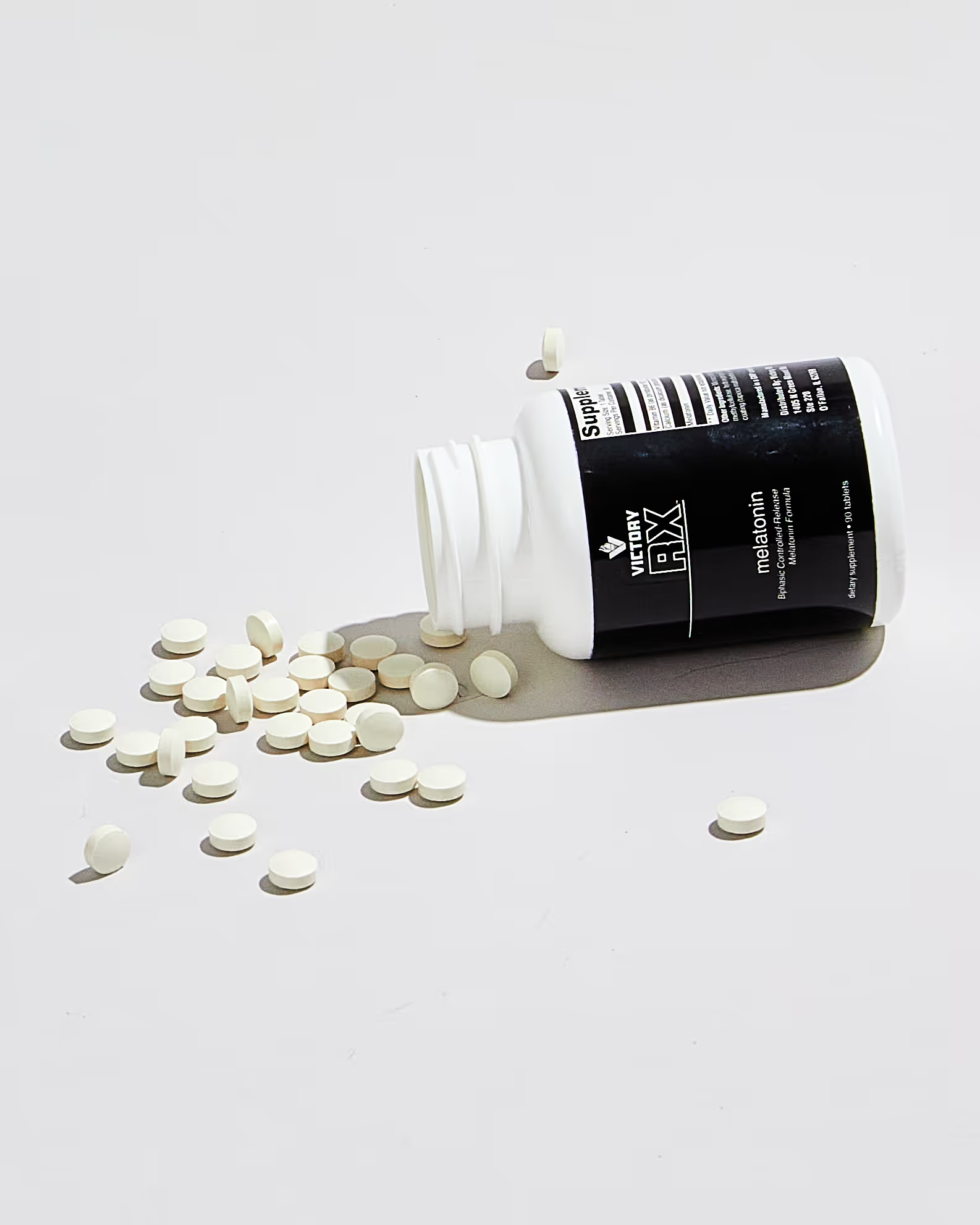
Micronized melatonin, on the other hand, is finely ground for smoother, gradual absorption. Because the particles are broken down to a smaller size, they bypass your liver’s first-pass metabolism and absorb more efficiently through the gut lining. That means better sleep onset, more stable melatonin levels overnight, and fewer side effects—especially with consistent use.
At Victory Men’s Health, we offer pharmaceutical-grade micronized melatonin as part of our personalized hormone optimization protocols. With this version, you’re getting a tool that actually works, not just a sugar-filled gummy from the store.
Melatonin for Sleeping: 6 Smart Hacks for Better Sleep
If you’re taking melatonin for sleeping but still waking up groggy, restless, or wide-eyed in the middle of the night, you’re not alone—and you’re not doing anything wrong. Many of our patients have tried melatonin at some point, but results depend heavily on how you use it. The good news? With a few simple tweaks, melatonin can go from frustrating to highly effective.
Here are 6 ways to get better sleep with melatonin:
- Upgrade to Pharmaceutical-Grade or Micronized Melatonin
- Find the Right Dose for Your Body
- Stick With It
- Pair With Magnesium and Key Hormones
- Create a Sleep-Friendly Environment
- Prioritize Sleep Hygiene
- Address the Bigger Picture
Upgrade to Pharmaceutical-Grade or Micronized Melatonin
Just because you see a bottle labeled “melatonin” at CVS, doesn’t mean it’s going to work for you. We recommend pharmaceutical-grade, micronized melatonin because it absorbs more effectively and releases more steadily through your gut lining.
That means better sleep without the spike-and-crash effect of most drugstore options. This type of melatonin mimics how your body naturally releases the hormone—gradually, not all at once.
Find the Right Dose for Your Body
If you’ve been told that 0.3mg is plenty, we’ve got news for you: most people need way more. That outdated recommendation was based on daytime melatonin levels, not optimal nighttime levels. For quality sleep, most people benefit from doses between 0.5 and 5 mg.
For men with pain, inflammation, or serious sleep issues, higher doses may be more effective—and are generally safe when used correctly and monitored by your provider.
Stick With It (Even If You Feel Groggy)
One of the most common complaints? “I took melatonin and felt awful the next morning.” If that sounds familiar, don’t worry—you’re not alone. That grogginess is usually your body adjusting, especially if you started with a higher dose.
Instead of jumping in at full strength, try starting with a lower dose and gradually increasing. This gives your melatonin receptors time to adjust and can help minimize that next-morning fog. Most people find that once their body adapts (usually within a few days), they’re sleeping better and waking up with more energy.
Pair With Magnesium and Key Hormones
Melatonin doesn’t work in isolation—your body needs the right environment (and support) for it to do its job. That’s why pairing melatonin with other essentials like magnesium, progesterone, or testosterone (when appropriate) can significantly boost its effectiveness.
Magnesium, for example, helps relax your muscles and nervous system, setting the stage for deeper sleep. And if you’re deficient in certain hormones, your natural melatonin production might be off to begin with. We conduct comprehensive lab work to help our patients achieve lasting results, rather than just masking the symptoms.
Create a Sleep-Friendly Environment
If your room is lit up like a football stadium, your body won’t know it’s bedtime, even if you’re taking a sleep aid like melatonin. Instead, dim the lights an hour before bed. Turn off screens. Use blackout curtains or an eye mask. All of this helps your body respond to melatonin naturally, whether you’re producing it yourself or taking it as a supplement.
Prioritize Sleep Hygiene
Melatonin won’t work well if your brain is overstimulated and stressed. Try taking a hot shower, doing a few minutes of deep breathing or stretching, and avoiding late-night snacks or alcohol.
This signals to your body that it’s time to relax and recover, not stay alert and digest food. A solid sleep hygiene routine can work wonders at helping melatonin for sleeping do its job more effectively and support deeper, more restorative rest.
Address the Bigger Picture
If you’re on testosterone therapy or dealing with chronic pain, inflammation, or frequent nighttime urination, your melatonin levels may be disrupted whether you realize it or not.
Melatonin works best as part of a complete hormone optimization plan. We work with our patients to help them determine and target the root cause of their symptoms so they can sleep better, feel stronger, and show up in every area of life.
Questions Our Patients Ask About Melatonin
Is Melatonin Safe to Take Every Night?
Yes. Research shows melatonin for sleeping is safe even at high doses and doesn’t shut down your body’s natural production, even with long-term use.
How Long Does Melatonin Take to Work?
Most people feel the effects within 30-60 minutes of taking melatonin and last for 4-8 hours. If you want the full spectrum of benefits (like deeper sleep and better recovery), it’s best to opt for consistent use.
What Time Should I Take Melatonin?
It’s best to take it 30-60 minutes before bed, ideally in a dimly lit room with no screens. This helps signal your brain it’s time to rest.
Can Melatonin Help Me Stay Asleep Or Just Fall Asleep?
Both. In addition to helping you fall asleep, melatonin can also help you stay asleep—especially with extended-release or higher-dose formulations. These types support more stable melatonin levels throughout the night.
How Much Melatonin Should I Take For Better Sleep?
Most people do best with 0.5-5 mg of melatonin, taken 30-60 minutes before bed. Some may need higher doses, especially if they’re dealing with chronic pain, inflammation, hormone imbalances, shift work, or jet lag from international travel. Always start low (0.5 or 1 mg) and work closely with your healthcare provider to find your ideal dose.
What are the Side Effects of Melatonin?
Melatonin is generally considered safe, but like any supplement, it can come with potential side effects such as headaches, nausea, dizziness, and in rare cases, low blood pressure or mild tremors.
In our experience working with patients, the most commonly reported reactions are vivid dreams, nightmares, or a paradoxical effect where melatonin makes someone feel more alert instead of sleepy. These effects are often related to dose or timing and can usually be managed by adjusting how much you take or when you take it.
Can I Take Melatonin With Other Sleep Supplements or Medications?
Yes, melatonin can often be used alongside other sleep aids, but the timing and dose matter. It may even help you reduce reliance on stronger medications, but always consult your provider first before making any changes to your current supplement regimen.
Sleep Better and Feel Stronger with Victory Men’s Health
Melatonin for sleeping can be incredibly effective, as long as you’re using the right dose, the right form, and pairing it with the right habits. If it hasn’t worked for you in the past, don’t write it off just yet. At Victory Men’s Health, we go beyond surface-level solutions.
We run advanced lab work to get to the root cause of your sleep issues—whether that’s hormone imbalance, inflammation, stress, or something else. From there, we create a personalized treatment plan that fits your goals, lifestyle, and needs.
If you’re struggling with men’s health issues like poor sleep, low energy, weight gain, or erectile dysfunction, we’re here to help you optimize your health from the inside out. Ready to take the next step? Book a consultation with our team today and get the support you deserve.

Related Resources



.avif)