Vitamin B12: How Much Per Day Should You Take?
Jump to
If you’ve been struggling with symptoms like low energy, fatigue, or brain fog, you may have heard that vitamin B12 could be a solution. But it’s not that easy—dosage matters. Whether or not it works for you often depends on knowing how much vitamin B12 per day your body needs.
While the recommended daily allowance gives us a baseline, your needs can vary depending on factors like your age, lifestyle, and health goals. Let’s break down why vitamin B12 matters, how much you really need, signs of deficiency, and how to keep your levels optimized.
Why Do I Need Vitamin B12?
Vitamin B12 is one of our most essential nutrients, yet it’s also one of the most overlooked.
Think of it as the spark plug that keeps your body running. It plays a vital role in red blood cell production, energy metabolism, and nervous system function—which all impact how strong, sharp, and resilient you feel each day.
For men, healthy B12 levels are especially important because deficiency symptoms can look a lot like low testosterone: fatigue, poor focus, and even sexual health concerns.
Beyond daily energy, vitamin B12 also supports heart and brain health, helps prevent anemia, and plays a role in DNA synthesis. Without enough of it, your body simply can’t perform at its peak.
Vitamin B12: How Much Per Day Do Men Really Need?
The general recommendation for adults is 2.4 micrograms (mcg) of B12 per day. That’s a good starting point, but many men need more depending on their lifestyle and health status.
If you’re highly active, under chronic stress, or have digestive issues that impact absorption, a higher daily intake (or supplementation) may be necessary to truly reap the benefits.
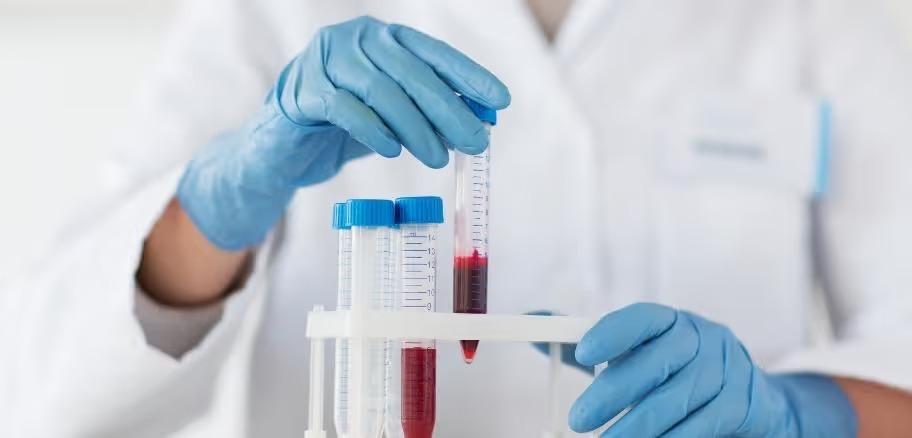
When we see a new patient, we start with comprehensive lab testing to get a clear picture of where you’re at before making any recommendations. The right vitamin B12 dosage for men can look different from one man to the next, which is why personalized care is so important.
Does Age Change Your Vitamin B12 Dosage?
Yes, and not just because of age alone. As men get older, absorption naturally becomes more difficult since stomach acid production declines around age 40-50.
But other factors can also interfere, including gastric surgeries like bypass, digestive conditions such as Crohn’s or celiac disease, and a lack of intrinsic factor—a protein your body needs to properly absorb B12.
Common medications like metformin or proton pump inhibitors (PPIs) can make the problem worse, which is why monitoring your levels becomes even more important over time.
That’s why older men—or those dealing with fatigue despite eating a balanced diet—may benefit from higher doses. In some cases, switching to vitamin B12 injections or rapid-dissolve tablets can also improve absorption.
Signs of Vitamin B12 Deficiency in Men
It’s not always obvious when your body is running low on vitamin B12. Many of the early warning signs can easily be blamed on stress, lack of sleep, or age. But if these issues keep popping up despite a healthy lifestyle, your B12 levels could be part of the problem.
Men who are deficient often report:
- Constant fatigue or weakness
- Brain fog and memory issues
- Mood changes or irritability
- Tingling or numbness in the hands and feet
- Erectile difficulties or low libido
- Shortness of breath or palpitations
The tricky part? These symptoms overlap with other conditions like low testosterone or sleep apnea. Testing means you won’t have to guess about the cause of your fatigue, which puts you one step closer toward fixing the problem.
For a deeper dive into how nutrient deficiencies can drive your symptoms, check out the Women Want Strong Men podcast episode below. We explained how hidden issues like low B12 levels could be draining your energy—and what to do about it.
How to Boost Vitamin B12 Naturally
Once you realize your vitamin B12 levels might be low, the next question is: how do you get it back up? There are plenty of ways to replenish your levels, from the foods you eat to supplements designed to give you an extra boost.
The approach that works best depends on your diet, absorption, and health goals. Let’s break down the most effective ways to keep your levels where they should be.
Best Vitamin B12 Foods
Animal-based foods like beef, salmon, tuna, eggs, and dairy are some of the best natural sources of vitamin B12. Most men who eat a high-meat or high-protein diet assume their levels are fine—but that’s not always the case.
Factors like reduced stomach acid, certain medications, or digestive issues can still lead to suboptimal B12 absorption. For men who eat little to no animal products, supplementation becomes even more important to maintain healthy levels and energy.
Best Vitamin B12 Supplements
For men who need extra support, B12 supplements come in several forms: tablets, capsules, sublingual (under-the-tongue) rapid-dissolve options, and injections. Whatever you decide, we recommend looking for supplements with “methylcobalamin” on the label.
This form is more bioavailable, which means your body absorbs and uses it more effectively than cyanocobalamin—the cheaper, less efficient form. We use methylcobalamin in both our rapid-dissolve tablets and vitamin infusions because it delivers faster, more consistent results.
Vitamin B12 Injections vs. Pills: What’s Better?
One of the most common questions we get about this vitamin is whether injections are more effective than pills. The answer depends on your body. For men with mild deficiencies and good absorption, oral supplements can work well—especially if you opt for a rapid-dissolve option.
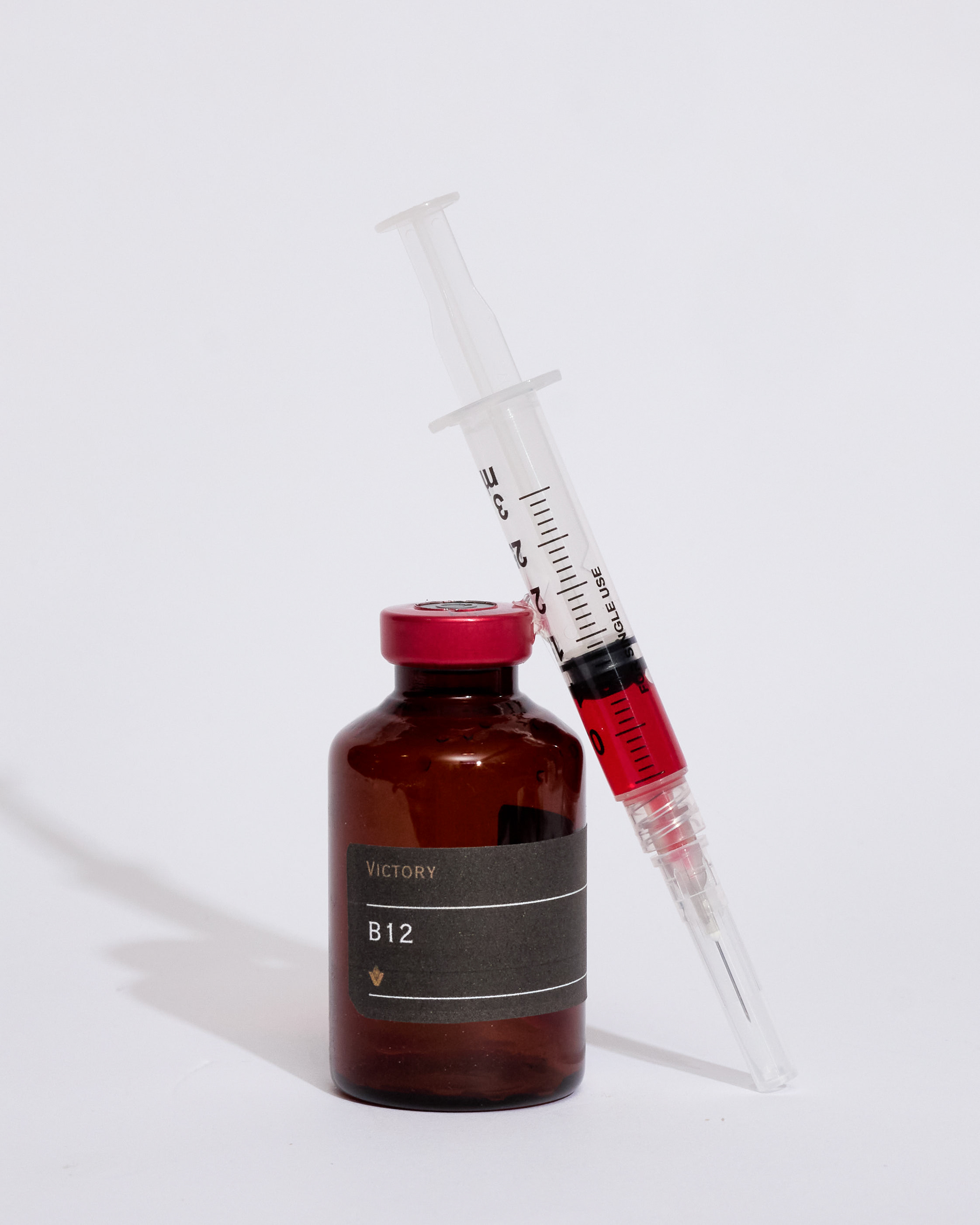
But if you’re dealing with fatigue, digestive issues, or age-related absorption decline, injections or infusions are the most reliable way to restore your levels quickly. They deliver B12 directly into your bloodstream, bypassing the gut altogether.
Many of our patients choose a combination: injections or infusions to restore levels fast, followed by daily rapid-dissolve tablets for maintenance. We use your lab work, health history, and goals to help you determine the best fit.
Your Top Questions About Vitamin B12, Answered
How Much Vitamin B12 Per Day Do Men Need?
Most men need at least 2.4 mcg per day, but athletes, older men, and those with absorption issues may require more. Lab testing is the best way to know for sure, so it’s best to consult with a provider who specializes in men’s health or hormone optimization.
Can You Take Too Much Vitamin B12?
Because it’s water-soluble, excess B12 is usually excreted in urine. High doses are generally safe, but some men may experience mild side effects like skin irritation or digestive upset.
How Long Does It Take to Notice Benefits?
Some men feel more energy within days of supplementation (especially with injections), while others may notice gradual improvements over several weeks. It all depends on your profile.
Are B12 Shots More Effective Than Pills?
Yes, for men with absorption issues or severe deficiencies. Injections and infusions ensure reliable delivery, while pills or tablets work better as a longer-term maintenance option.
Can Vitamin B12 Improve Testosterone or Libido?
While B12 doesn’t directly raise testosterone, it supports energy production, circulation, and nerve function—all of which can positively impact your sexual health.
Get Your Edge Back With Personalized Care
The standard 2.4 mcg daily recommendation only keeps B12 in the normal range—not the optimal one. Absorption varies widely, which is why supplements are often highly dosed. Even within the “normal” range (180-950 pmol/L), low levels are linked to fatigue, cognitive decline, cardiovascular risk, and bone loss. Personalized care helps you optimize your B12 for better energy and long-term health.
At Victory Men’s Health, we run advanced lab testing to uncover the root cause of your symptoms. From quality supplements and vitamin infusions to hormone optimization or peptide therapy, we’ll make sure your body gets what it needs to perform at its best.
Book a consultation today to begin the journey toward feeling stronger, sharper, and healthier.

Related Resources