Free vs. Total Testosterone: What to Know & Why It Matters

Jump to
When it comes to understanding your hormones, the conversation often centers on testosterone—but it’s not just a single number. Getting clear on free vs. total testosterone can be the key to uncovering a real hormone imbalance instead of overlooking it.
On a recent episode of the Women Want Strong Men podcast, we met with testosterone expert Dr. Keith Nichols to discuss how free testosterone gives a clearer picture of true hormone health. Save the episode below for deeper insights, and let’s dive in.
https://open.spotify.com/episode/7LGSoHukxp3YUbJcWSeUO7?si=NIKoKWCSSmKmP7au9OFpNA
What’s the Difference Between Free and Total Testosterone?
Most men hear “testosterone” and assume it’s just one number, but the truth is more nuanced. Your body has both total testosterone (the overall amount) and free testosterone (the portion your body can actually use).
Think of total testosterone as the money in your bank account, while free testosterone is the cash in your wallet. You need both, but only one is immediately available. Understanding the difference is how to make sense of your lab results and how you’re feeling day to day.
Here’s the breakdown:
- Total testosterone measures the amount of testosterone in your blood, including testosterone that’s bound to proteins like SHBG (sex hormone–binding globulin) and albumin, along with the unbound portion.
- Free testosterone measures only the small fraction of testosterone that’s unbound and readily available for your body to use.
Free vs. Total Testosterone: Which Number Matters More?
This is one of the biggest questions we hear. While both numbers are important, free testosterone is generally the better indicator of how your body is really functioning.
That’s because bound testosterone (the kind attached to proteins) isn’t doing the heavy lifting—it’s basically locked away. Free testosterone, on the other hand, is the form responsible for energy, muscle growth, sex drive, and overall vitality.
Why Is My Free Testosterone Low if My Total Looks Normal?
This scenario happens more often than most men realize. A common culprit is elevated SHBG (sex hormone–binding globulin). SHBG’s job is to bind to testosterone and transport it through the bloodstream.
SHBG levels can rise due to factors like age, genetics, insulin sensitivity, certain medications, or issues with the liver or thyroid. Higher SHBG means more testosterone gets bound, leaving less available as free testosterone. That means your lab might show a “normal” total testosterone number, when functionally, your body could be running on empty.
That said, having high or low SHBG isn’t automatically good or bad—it’s simply one piece of the puzzle your provider will consider when looking at the bigger picture.
How Are Free vs. Total Testosterone Tested?
When it comes to checking your testosterone levels, the “how” matters just as much as the “what.” Not every blood test is created equal, and relying on the wrong one can give you an incomplete picture of your health.
At Victory Men’s Health, we see plenty of men with “normal” total testosterone numbers who still feel exhausted, unmotivated, or low on sex drive—because their free testosterone hasn’t been properly measured. Here’s what to know about each testing method:
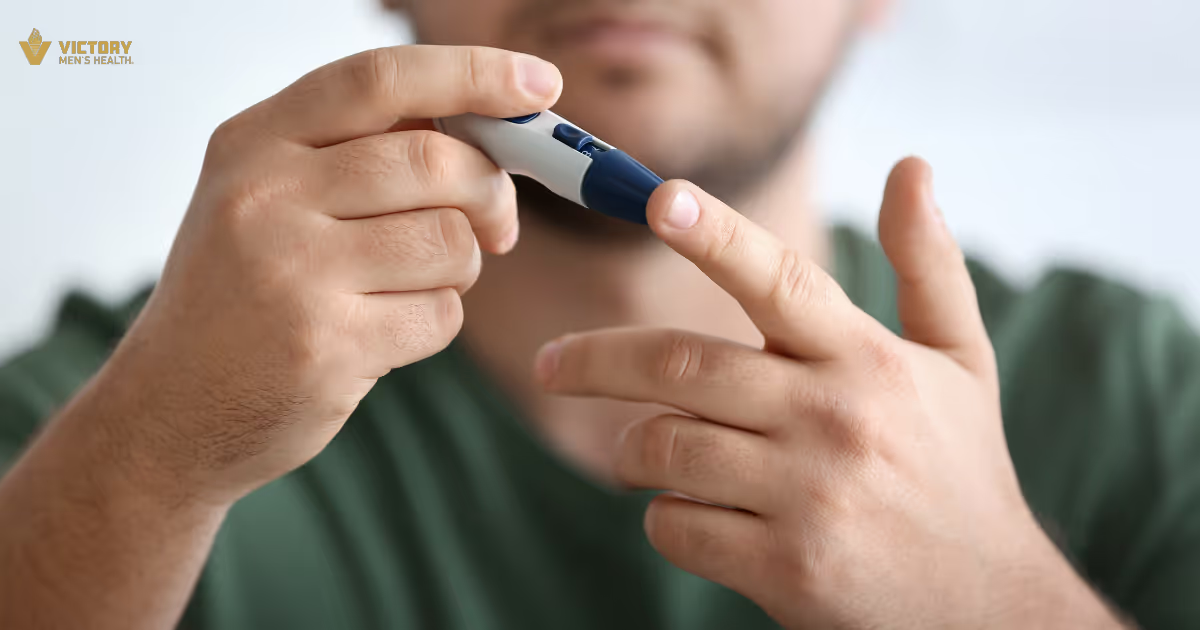
- Total testosterone is typically measured through a simple blood test.
- Free testosterone can be measured through a specialized blood test or calculated on your own based on total testosterone, SHBG levels, and albumin.
What’s a Healthy Range for Free and Total Testosterone?
Ranges vary depending on the lab, but here are the general benchmarks:
- Total testosterone: Roughly 300-1,000 ng/dL is considered “normal” for men.
- Free testosterone: Generally 5-21 ng/dL is a typical range.
The problem? These ranges are broad and don’t take symptoms into account. A man sitting at 350 ng/dL for total testosterone may technically fall into the normal range, but still experience low T symptoms. That’s why it’s so important to look at both the numbers and how you feel.
Remember: normal is not optimal!
What Are the Symptoms of Low Free Testosterone?
If your free testosterone is low, chances are you’ll feel it—even if your total testosterone looks normal on paper. That’s because free testosterone is what fuels your energy, sex drive, muscle growth, and mental sharpness.
Men with low free T often describe feeling “off” without being able to put a finger on why. Here are some of the most common red flags to watch for:
- Persistent fatigue or low energy
- Difficulty losing fat or gaining muscle
- Reduced libido or erectile dysfunction
- Brain fog and lack of mental sharpness
- Poor recovery from workouts
- Decreased motivation or confidence
If you’re ticking off more than a few of these boxes, it’s worth asking your provider about checking both free and total testosterone.
How to Treat Low Free Testosterone
Low free testosterone doesn’t mean you’re stuck feeling sluggish or unmotivated forever. There are proven treatments and lifestyle adjustments that can help restore balance and get your levels back where they need to be.
Let’s walk through what recovery can look like:
- Lifestyle adjustments – Exercise (especially resistance training), quality sleep, stress management, and a nutrient-dense diet can all support testosterone balance.
- Addressing underlying issues – Certain medical conditions can affect SHBG and testosterone. Identifying and treating the root cause may naturally help raise testosterone levels for some men.
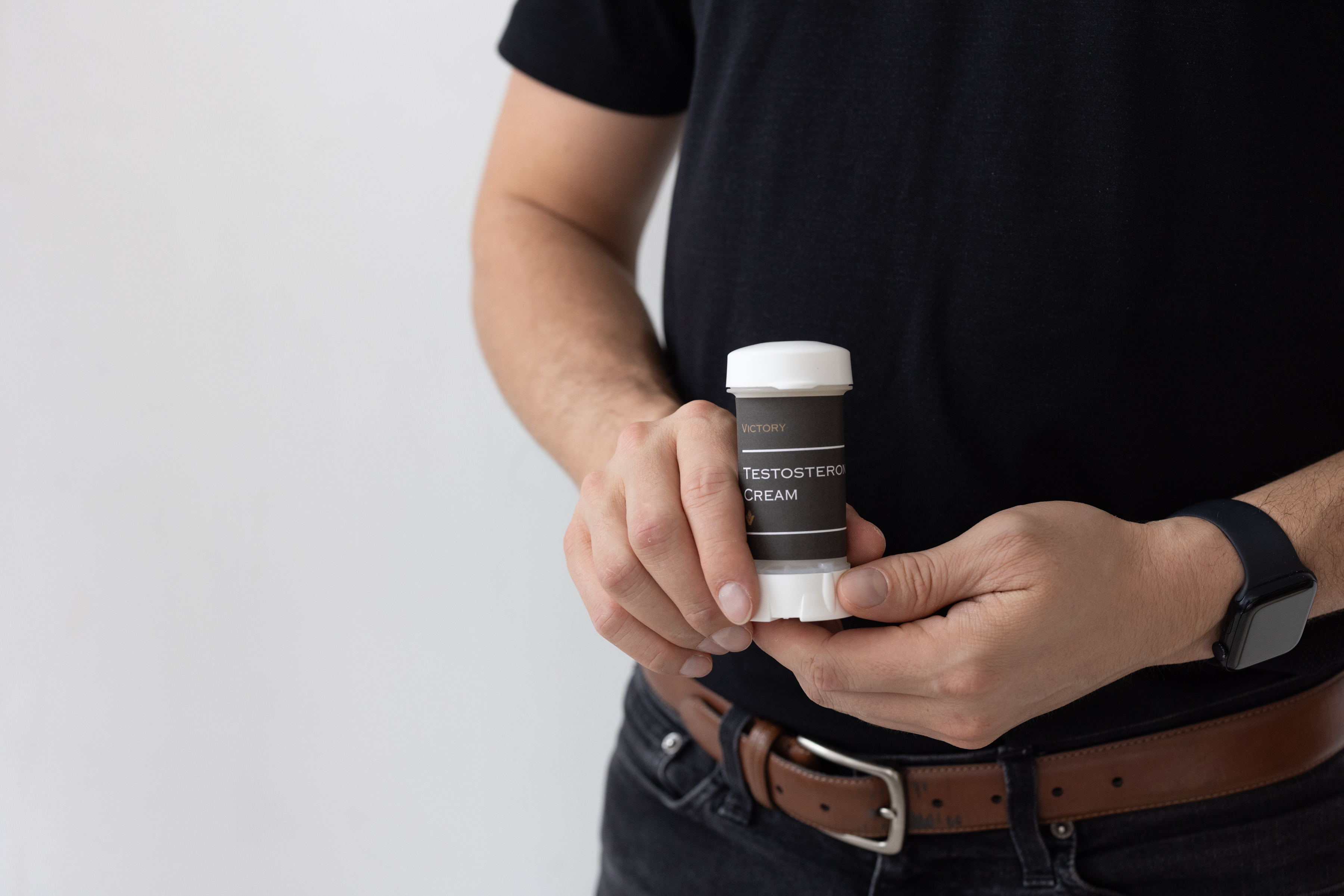
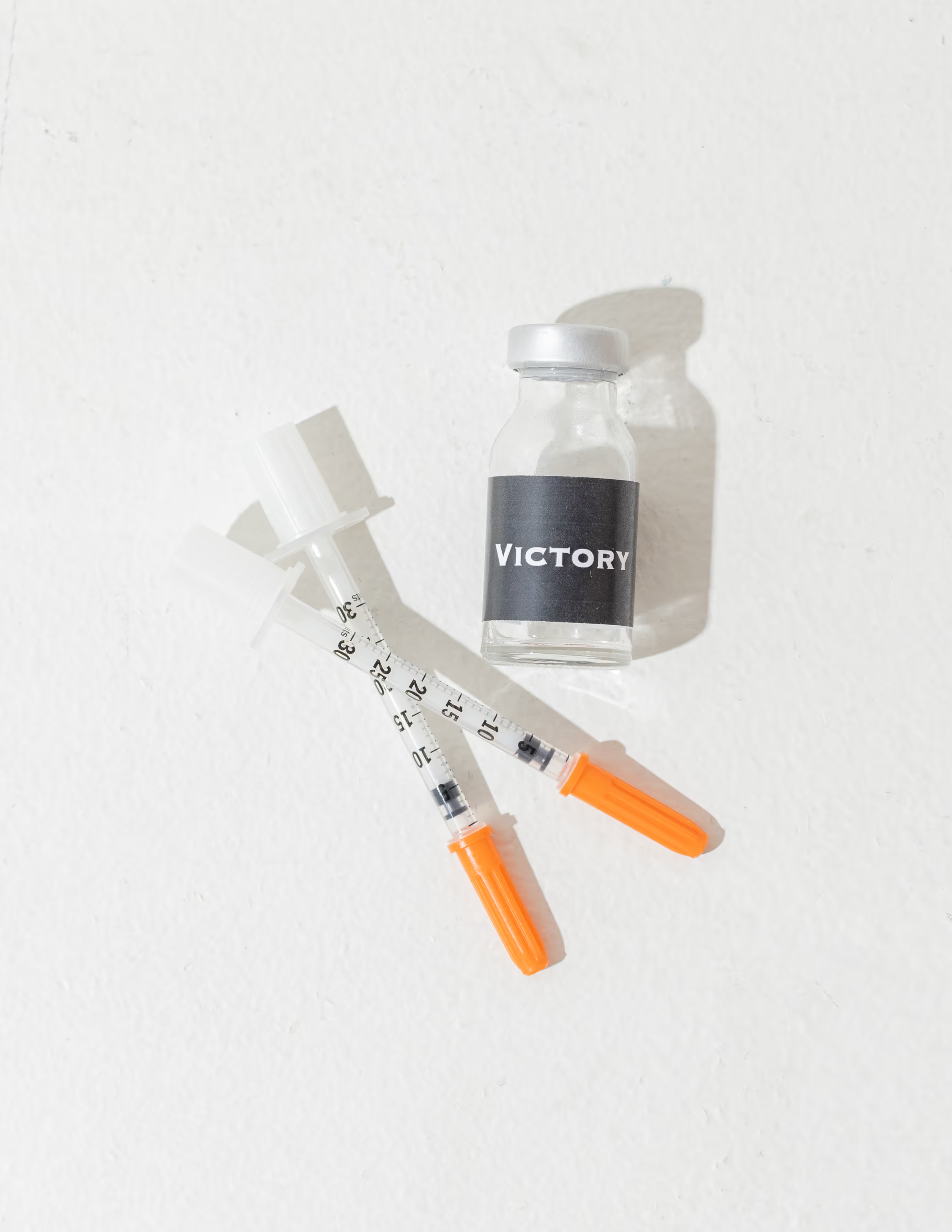
- Testosterone replacement therapy (TRT) – For men with clinically low testosterone, TRT can restore both total and free testosterone to optimal levels. We can administer TRT through injections, creams, or pellets, depending on what works best for you.
At Victory Men’s Health, your treatment is always tailored. It’s not just based on lab numbers, but on how you feel and your unique needs.
Free vs. Total Testosterone FAQs
Can You Improve Free Testosterone Naturally?
Yes, in some cases. Reducing excess body fat, getting better sleep, cutting back on alcohol, and strength training can all help improve your free testosterone levels. Certain supplements, like vitamin D3, magnesium, and zinc, may also provide support.
Does TRT Raise Free Testosterone?
Yes. TRT increases both total and free testosterone. An experienced provider will also look at both numbers to determine the right dose, frequency, and type of testosterone therapy for you.
Is SHBG Always a Problem?
Not always. SHBG plays a role in hormone balance, but when levels are on the upper end of the range, it can limit the amount of testosterone that’s free and usable. That’s why SHBG should be checked alongside testosterone levels.
How Often Should You Test Testosterone?
There’s no one-size-fits-all schedule. The right approach is to test when concerning symptoms come up, or if you’re starting or adjusting TRT. Your provider can help you choose the testing frequency that makes the most sense for you.
Can Low Free Testosterone Affect Fertility?
Free testosterone does play a role in sperm production, but a low testosterone value on its own doesn’t necessarily mean there’s a fertility problem. The only way to know for sure is through a sperm analysis.
Optimize Your Testosterone With Victory Men’s Health
When it comes to free vs total testosterone, the numbers tell different stories. Total testosterone gives you the big picture, but free testosterone shows what’s truly active in your body.
If you’re experiencing symptoms of low T but your labs look “normal,” don’t stop there. Take your hormone health into your own hands by asking about your free testosterone levels, SHBG, and other contributing factors.
At Victory Men’s Health, we go beyond the surface to uncover the root cause behind your symptoms and determine the best path forward. Whether it’s fine-tuning lifestyle changes or creating a personalized TRT plan, our goal is to help you feel like yourself again.
Ready to get answers? Book your consultation today and take the first step forward.

Related Resources