Signs Your TRT Dose Is Too High (& How to Fix It)

Jump to
More isn’t always better when it comes to testosterone therapy. One of the biggest mistakes we see is patients chasing a higher TRT dose instead of paying attention to how they actually feel and function day to day. In many cases, the problem isn’t the testosterone itself.
Sometimes it’s poor injection frequency, unstable hormone levels, unrealistic expectations, or protocols designed to target numbers instead of long-term symptom improvement. If your current protocol is leaving you feeling unstable, your TRT dose may need adjustment.
Today, we’re breaking down the signs to watch for and what you can do to start feeling better again. For a deeper dive into TRT optimization after reading, check out the below episode of the Women Want Strong Men podcast featuring TRT expert Dave Lee.
The Real Reason Some Men Feel Worse on Testosterone
We see a lot of patients who assume a higher TRT dose automatically means better results. But in clinical practice, some of the worst side effects come from overly aggressive protocols that create unstable hormone levels instead of steady optimization.
Testosterone therapy shouldn’t leave you feeling anxious or physically uncomfortable. A lot of the time, it’s not even that the dose is dramatically high. For some patients, the real problem is poor injection frequency or cookie-cutter plans with little personalization or monitoring.
That’s why individualized care is everything. Body composition, lifestyle habits, injection timing, and hormone sensitivity all affect how you’ll respond to treatment. The best TRT dose isn’t the highest one—it’s the one that helps you feel your best with the fewest side effects.
Signs Your TRT Dose May Be Too High
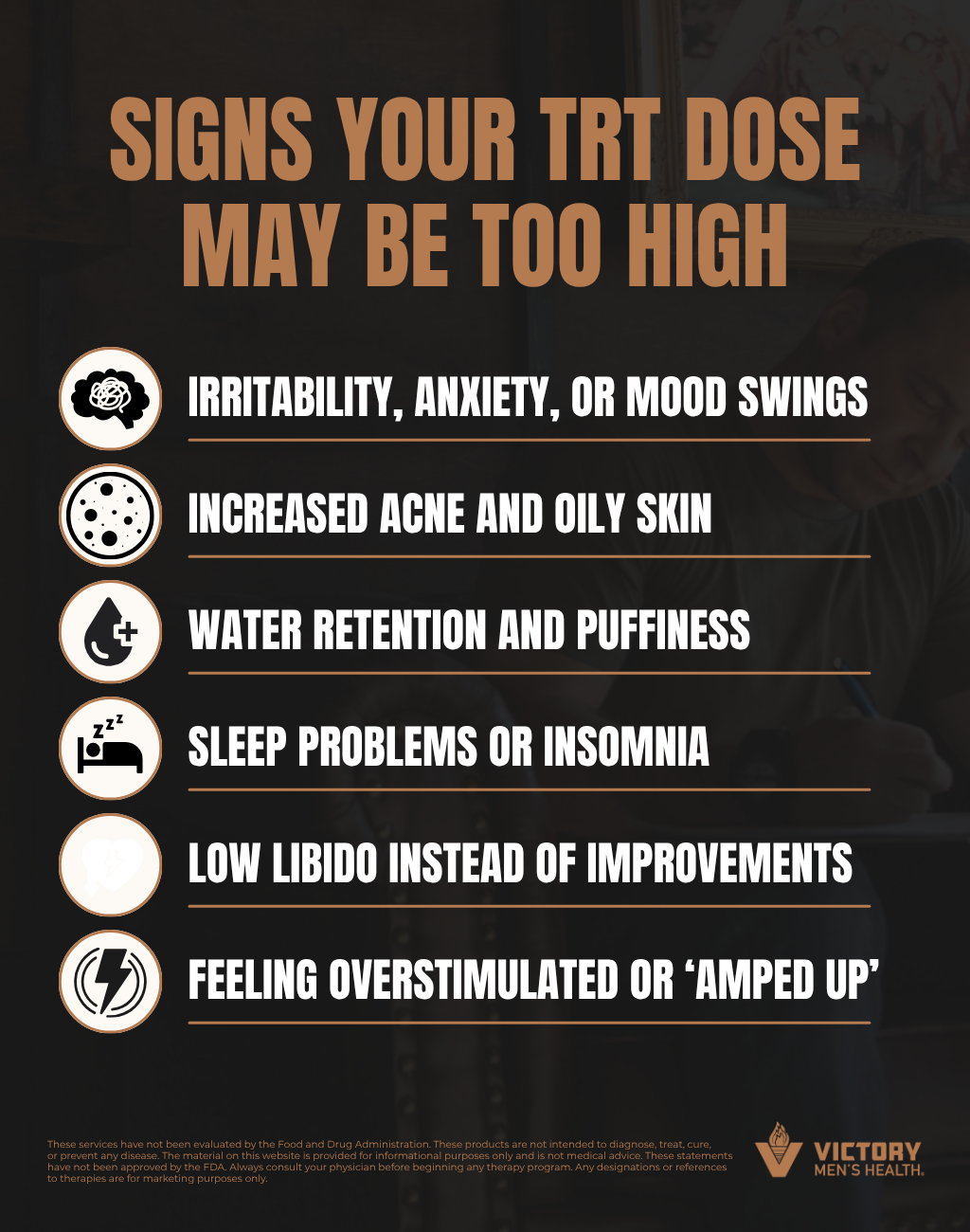
Hormone optimization takes time, and some adjustments are completely normal early on. But when we consistently see certain symptoms alongside unstable labs or hormone fluctuations, it may signal that your protocol needs adjustment.
The most common signs your TRT dose may be too high include:
- Irritability, anxiety, or mood swings
- Acne and oily skin
- Water retention and puffiness
- Sleep problems or insomnia
- Libido changes instead of improvements
- Feeling overstimulated or “amped up”
Irritability, Anxiety, or Mood Swings
One of the most common complaints we hear from patients on overly aggressive TRT protocols is that they no longer feel emotionally steady. Instead of feeling confident and focused, they feel reactive, impatient, anxious, or emotionally “on edge” throughout the day.
In our experience, this often happens when hormone levels fluctuate too dramatically or when testosterone levels are being pushed beyond what you tolerate well. TRT should improve stress resilience and mental clarity, not leave you feeling mentally overstimulated all the time.
Acne and Oily Skin
Acne and oily skin are common side effects of testosterone therapy, but they don't always mean your dose is too high. Some men are simply more prone to skin changes than others and may experience breakouts even on relatively conservative TRT protocols.
However, acne can sometimes become more noticeable when hormone levels fluctuate significantly or when a patient's dose or treatment schedule needs adjustment.
While skin changes can happen during the adjustment phase, persistent breakouts along the jawline, chest, shoulders, or back can suggest excessive androgen stimulation. Often, stabilizing hormone levels and adjusting injection frequency can improve these symptoms.
Water Retention and Puffiness
A lot of men assume sudden weight gain on TRT means they’re rapidly building muscle, but sometimes it’s actually fluid retention. Puffiness in the face, bloating, swollen fingers, or feeling softer can all be signs of water retention, particularly in men who already have borderline or elevated blood pressure.
In some cases, these symptoms may also point toward hormone instability or a protocol that needs adjustment. We frequently see this with large weekly injections that create dramatic hormonal swings throughout the week. Patients are often surprised by how much better they feel once their hormone levels become more stable and consistent.
Sleep Problems or Insomnia
TRT should support recovery, energy, and overall well-being. But when a dose gets too aggressive for a patient, sleep quality is one of the first things to suffer. Some patients struggle to fall asleep, while others wake up throughout the night feeling restless or overheated.
In our clinics, we pay close attention to sleep complaints because they often signal nervous system overstimulation or unstable hormone levels. Feeling physically exhausted but mentally wired is not a sign of properly optimized testosterone therapy.
Libido Changes Instead of Improvements
Many people assume higher testosterone automatically means higher libido, but that's not always the case. Some men actually notice their libido becomes less reliable or more unpredictable after starting TRT, even when their testosterone levels look great on paper.
A quick Google search will often blame estrogen, but that's not always what's happening. In some genetically predisposed men, these changes may be related to serotonin signaling and often improve with proper dosing, injection frequency, and time. This is one reason we focus on optimizing the entire protocol rather than simply chasing higher testosterone levels.
Feeling Overstimulated or “Amped Up”
This is one of the hardest symptoms for patients to describe, but we hear it constantly. Patients will often say they have energy, but it doesn’t feel productive or sustainable. Instead, they feel restless, overstimulated, or uncomfortable in their own body.
Testosterone therapy should not make you feel constantly revved up or emotionally volatile. When patients describe feeling “too intense” on TRT, it’s usually a sign we need to reevaluate their protocol so they can get back to feeling like themselves again.
Best Ways to Stabilize Your TRT Protocol
One of the biggest mistakes we see is patients trying to adjust their TRT dose based on social media advice or temporary symptoms from week to week. Hormone optimization requires consistency, patience, and proper monitoring.
This is why we strongly encourage patients to work closely with an experienced TRT provider who understands how to evaluate symptoms, lab work, injection timing, and long-term health markers together rather than chasing one isolated number.
Here are some of the most common ways we stabilize TRT protocols:
- Lowering total weekly dose: Some patients feel better at lower testosterone levels. More is not always better when it comes to TRT dosing, and everyone’s different.
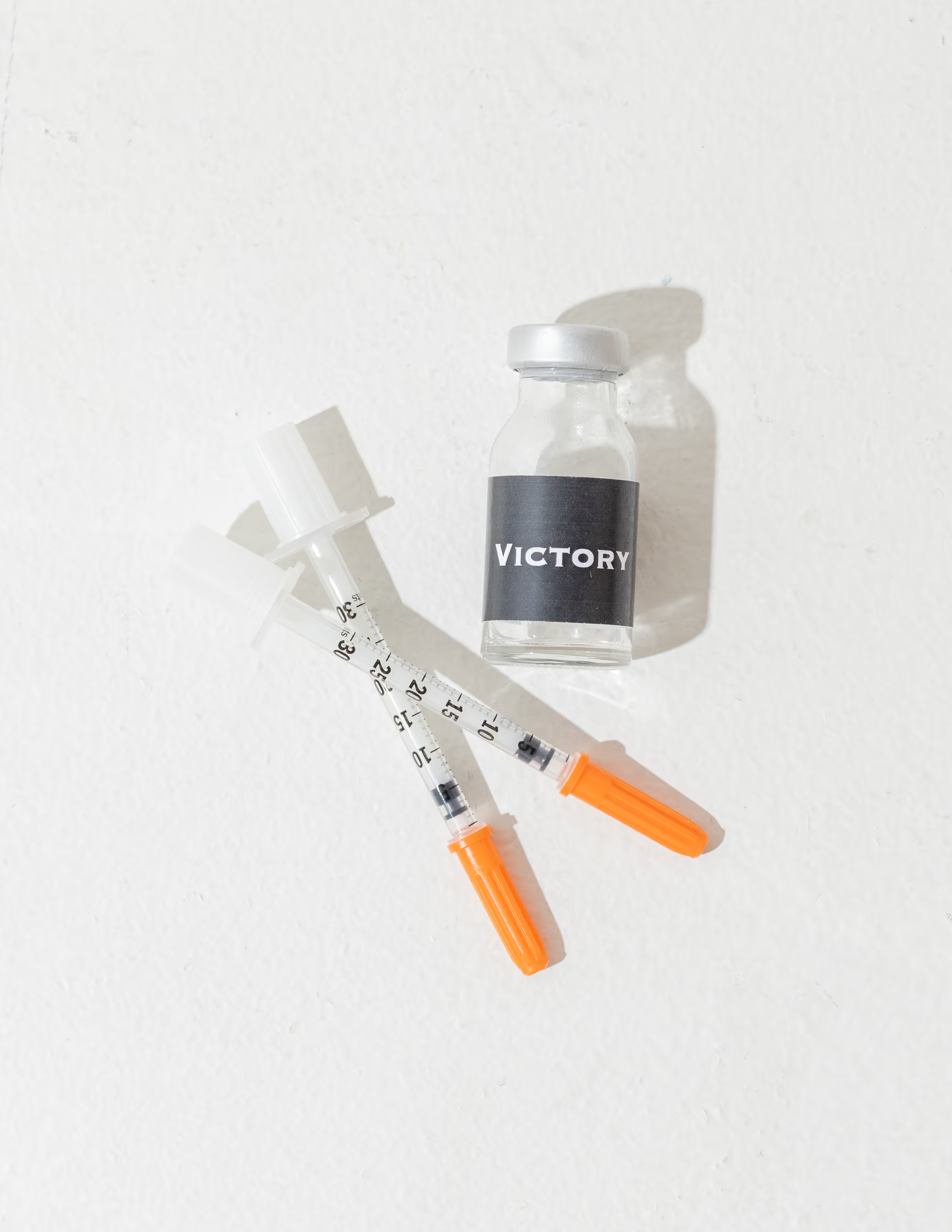
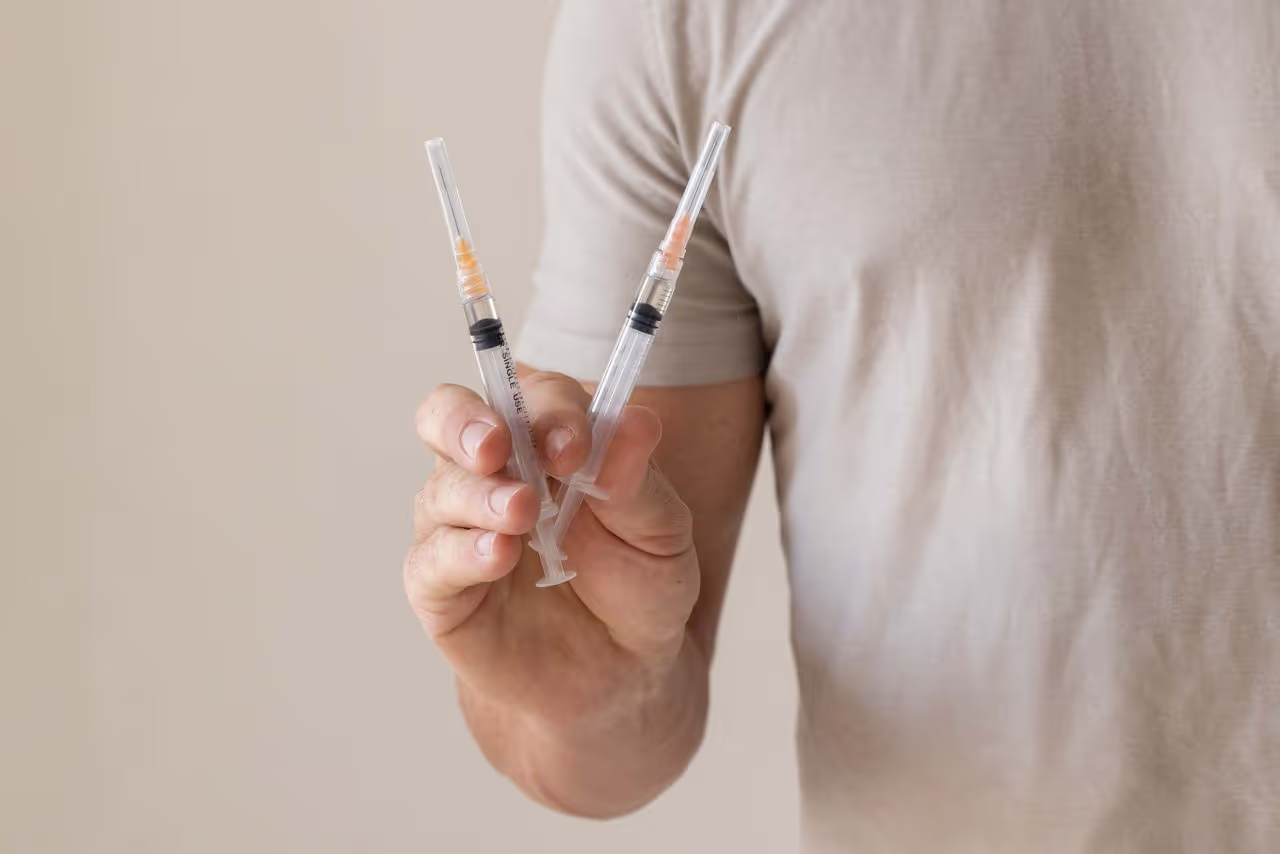
- Increasing injection frequency: Smaller, more frequent injections often create more stable hormone levels and fewer side effects compared to large weekly injections.
- Reviewing labs alongside symptoms: Lab work only tells part of the story. We always evaluate how patients truly feel in addition to testosterone levels.
- Evaluating all lab markers: Hormones do not operate independently. Looking at the full picture helps us make smarter adjustments.
- Allowing time for stabilization: Don’t be too quick to make changes. Your body needs time to adapt before meaningful conclusions can be made.
- Improving sleep, diet, alcohol intake, and stress levels: Lifestyle habits dramatically impact how patients respond to TRT and how many side effects they experience.
- Avoiding self-adjusting protocols: We frequently see patients create unnecessary problems by constantly making changes to their treatment plan without guidance.
Optimize Your Testosterone With Victory Men’s Health
Testosterone therapy can be life-changing when it’s done right, but optimization isn’t about chasing the highest testosterone levels possible. It’s about creating stable hormone levels that help you feel better physically, mentally, and emotionally over the long term.
At Victory Men’s Health, we take an individualized approach to TRT by looking at the full picture of your health and lifestyle to build a treatment plan that works for you. If you’re dealing with side effects or questioning whether your current TRT dose is right for you, our team can help.
Book a consultation today and start optimizing your testosterone levels the right way.

Related Resources